

What Are Early Signs and Symptoms of Kidney Stones?
May 26th, 2026 by Fuad Elkhoury
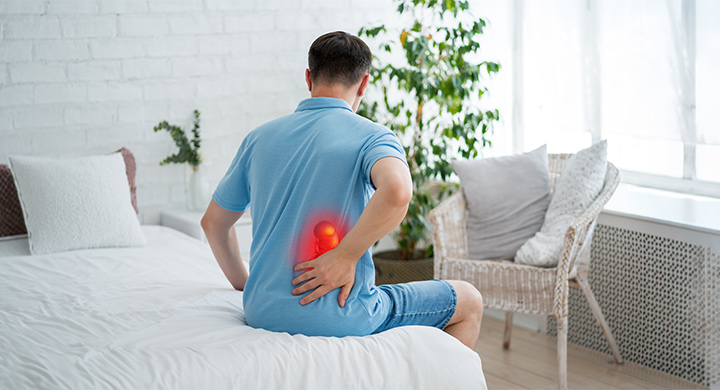
Kidney stones affect nearly 1 in 11 U.S. adults. If you live in Southern California, your risk is even higher. Orange County’s hot, dry climate accelerates dehydration, the single most significant risk factor for stone formation. The good news? Most kidney stones can be detected and treated before they become a full-blown emergency. Just get to know what early warning signs to look for.
This guide walks you through the early signs and symptoms of kidney stones, explains when to see a urologist versus go to the ER, and outlines the treatment options available at Orange County Urology Associates.
What Is a Kidney Stone?
Kidney stones are hard and crystal-like deposits. They form inside the kidneys when minerals and salts in your urine become too concentrated. They range in size from a tiny grain of sand to, in rare cases, a golf ball. The four main types are the following:
- Calcium oxalates are the most common type. They are linked to high-oxalate foods and low fluid intake.
- Uric acid is associated with high-protein diets, gout, and metabolic syndrome.
- Struvite is caused by urinary tract infections. They can grow rapidly.
- Cystine is rare, hereditary, and tends to recur
Small stones may pass without any symptoms at all. Larger stones are generally 3 mm or more. They can block the ureter (the narrow tube connecting the kidney to the bladder) and trigger intense pain and other symptoms.
Early Warning Signs of Kidney Stones
Kidney stones are typically silent while sitting in the kidneys. Symptoms begin when a stone starts to move. The earliest signs are subtle. They are easy to dismiss as a muscle strain or minor UTI. It is exactly why patients often delay seeking care. Here is what to watch for:
1. Dull or Persistent Flank Pain
The first sign is often a vague and persistent ache on one side of your back, just below the ribs. This flank pain is caused by the stone irritating kidney tissue or beginning to shift. People may feel a dull pressure or mild discomfort rather than sharp stabbing pain. Muscle strain usually improves with rest and position changes. Kidney stone pain typically does not.
2. Changes in Urination
Stone approaches the bladder. Then you may notice an increased urgency to urinate, more frequent trips to the bathroom with little urine produced, or a mild burning sensation. These symptoms closely mimic a urinary tract infection. But a urine culture will come back negative for bacteria. If you are experiencing UTI-like symptoms without a confirmed infection, kidney stones deserve serious consideration.
3. Urine Color Changes
Check your urine. Healthy and well-hydrated urine is pale yellow. If your urine is dark amber, cloudy, or has a strong odor, you may be dehydrated. The primary risk factor for stone formation. Pink, red, or cola-colored urine indicates blood. This hematuria occurs when a stone scrapes the lining of the urinary tract. Even microscopic blood invisible to the naked eye can be detected in a urine test at our office.
4. Mild Nausea
Mild queasiness can be an early signal. The kidneys share nerve pathways with the gastrointestinal tract. This means kidney pain can trigger nausea even before the pain becomes severe. If nausea escalates to vomiting or is accompanied by severe pain, seek care immediately.
| Recognize early symptoms to save yourself from a crisis.
If you experience any combination of flank pain, urinary changes, and urine discoloration, call Orange County Urology Associates at 949-855-1101. Early evaluation with imaging and a urinalysis can diagnose a stone before it becomes an emergency. |
Early Signs of Kidney Stones vs. Advanced Symptoms
The table below helps you understand how kidney stone symptoms typically progress and when each stage warrants action:
| Early Signs | Advanced Symptoms | Action |
|---|---|---|
| Dull flank pain (below ribs) | Severe, wave-like renal colic | See your urologist |
| Increased urination urgency | Inability to urinate at all | See your urologist |
| Mild burning during urination | Burning with blood in urine | See your urologist |
| Urine appears darker/cloudy | Pink, red, or cola-colored urine | Go to ER or call us |
| Mild nausea | Vomiting that won’t stop | Go to ER immediately |
| Vague lower back discomfort | Fever + chills + back pain | Go to ER immediately |
These Warning Signs Require Emergency Care
Certain combinations of symptoms indicate a urologic emergency. Go to the emergency room or call 911 if you experience the following:
- A fever above 100.4°F (38°C) combined with back pain or chills may indicate a kidney infection (pyelonephritis) or urosepsis, a life-threatening bloodstream infection.
- Complete inability to urinate may indicate a blockage causing acute kidney injury.
- Extreme pain that causes uncontrollable vomiting or prevents you from remaining still.
- Blood in the urine accompanied by fever.
Children with unexplained abdominal pain should also undergo a urologic evaluation unless another diagnosis is established. Kidney stones in children may present differently than in adults.
Kidney Stones Causes: Risk Factors
Kidney stones develop as a result of a combination of dietary, behavioral, medical, and environmental factors. In Southern California, dehydration is the leading cause. Hot weather, outdoor activity, and inadequate fluid intake reduce urine volume, causing mineral crystallization.
Diet plays a crucial role. High sodium intake causes the kidneys to excrete more calcium. High animal protein increases uric acid levels. And added sugar increases the risk of uric acid stones. The National Kidney Foundation notes that diets high in sodium, red meat, and seafood, but low in fruits, vegetables, and water, significantly increase the risk.
Type 2 diabetes, gout, hyperparathyroidism, inflammatory bowel disease, and a history of bariatric surgery increase susceptibility to stone formation. Diuretics, antacids, and high-dose vitamin C supplements may also contribute.
The recurrence rate of kidney stones reaches 50% within five years. Therefore, after the first episode of stone formation, it is crucial to develop an individualized prevention plan in the OCUA, including 24-hour urine collection and metabolic testing.
Kidney Stones Treatment Options at OCUA
Kidney Stones Treatment at Orange County Urology Associates is individualized based on stone size, location, composition, and your overall health. Our urologists offer the full spectrum of evidence-based interventions:
| Treatment | Stone Size | Anesthesia | Recovery | Notes |
|---|---|---|---|---|
| Watchful Waiting | < 5 mm | None | Days–weeks | Hydration, pain relief, strained urine |
| ESWL | < 2 cm | Sedation | 1–2 days | Non-invasive shock waves; 70–90% success rate |
| Ureteroscopy (URS) | Any ureteral | General | Same day | Outpatient laser; higher stone-free rate than ESWL |
| PCNL | > 2 cm | General | 2–3 days | Most effective for large stones; 85–95% success rate |
For stones 5 mm or smaller, many patients can pass them at home. However, any procedure should only be performed under a doctor’s supervision and after a thorough examination. Self-medication is dangerous. So, if your doctor approves, you can alleviate your condition at home. It’s enough to increase your fluid intake, take over-the-counter pain relievers, and take alpha-blockers (such as tamsulosin) to relax the ureter. Our team will monitor your condition and intervene if the stone doesn’t pass within a reasonable time.
How to Prevent Kidney Stones from Coming Back
Hydration is the cornerstone of kidney stone prevention. Adults who have already formed stones should aim to produce at least 2.5 liters of urine per day. Typically, this requires 3 liters of fluid per day. Monitor the color of your urine; a pale straw-yellow color indicates adequate hydration.
Additional dietary strategies include:
- Reduce sodium intake to less than 2,300 mg per day
- Moderate animal protein intake, such as red meat, poultry, and seafood
- Maintain adequate calcium levels in your diet. Low calcium levels paradoxically increase oxalate absorption.
- Increase lemon or orange juice intake. Citrate naturally inhibits crystal formation.
- Avoid foods high in oxalates (spinach, nuts, beets) if you have a history of calcium oxalate stones.
New research (2026):
A recent clinical study showed that smart water bottle technology and reminder apps alone are insufficient to reliably prevent kidney stone recurrence. Individualized prevention plans developed by a urologist remain the gold standard. They include 24-hour urine testing and a tailored diet or pharmacological therapy.
See a Urologist in Orange County
Are you experiencing any of the symptoms described in this article? Or have you already passed a kidney stone and want to prevent another one? The board-certified urologists at Orange County Urology Associates are ready to help.
We offer diagnostic imaging, urinalysis, stone analysis, and a full range of minimally invasive treatments, including ESWL, ureteroscopy with laser lithotripsy, and PCNL, at our four conveniently located locations in Orange County.
Orange County Urology Associates
23961 Calle de la Magdalena, Suite 500, Laguna Hills, CA 92653
Offices also in: Mission Viejo | Huntington Beach | Irvine
☎ Call or Text: 949-855-1101
Frequently Asked Questions
Is it possible to live with a kidney stone without pain?
Yes. Small stones or stones that are stationary in the kidney may not cause any symptoms. Sometimes, a doctor discovers them accidentally during an examination for another condition. Symptoms usually begin when the stone begins to move.
How long does it take to pass a kidney stone?
Stones 4 mm and smaller usually pass within 1-2 weeks with adequate fluid intake. Stones 5 to 10 mm in size may take 2-4 weeks to pass and often require medical attention. Stones larger than 10 mm rarely pass on their own.
How does pain from a kidney stone feel?
The pain usually begins as a dull ache in the side and intensifies to severe, cramping attacks. Doctors call these attacks renal colic. The attacks radiate from the back down to the groin and genitals. Many patients describe this as the worst pain of their lives. Unlike muscle tension, it does not subside with rest or changes in body position.
Are kidney stones dangerous if left untreated?
A stone blocking the flow of urine can cause a kidney infection, irreversible kidney damage, or urosepsis, a serious bloodstream infection. Prompt diagnosis and treatment are crucial, especially if fever or inability to urinate is present.
How can a doctor diagnose kidney stones?
Diagnosis typically includes a CT scan without contrast, a urine test to detect blood or infection, and blood tests to assess kidney function. A kidney stone should be sent for laboratory analysis to determine its composition and develop preventative measures.

Fuad Elkhoury
Los Angeles native Dr. Fuad Elkhoury, a skilled urologist, specializes in advanced endoscopic and robotic surgery. With expertise in kidney stone treatment and Holmium Laser Enucleation of the Prostate (HoLEP) for BPH, he prioritizes patient care, providing education and collaborative decision-making. A member of the American Urological Association, Dr. Elkhoury ensures a supportive experience, aiming to alleviate patient anxiety. Outside of his practice, he enjoys sports, outdoor activities, and family time.
Areas of Expertise: Advanced Endoscopic Surgery, Robotic Surgery, Holmium Laser Enucleation of the Prostate (HoLEP), Patient-Centric Care


- June 2026
- May 2026
- April 2026
- March 2026
- February 2026
- January 2026
- December 2025
- November 2025
- October 2025
- September 2025
- August 2025
- July 2025
- June 2025
- May 2025
- April 2025
- March 2025
- February 2025
- December 2024
- November 2024
- October 2024
- September 2024
- August 2024
- July 2024
- June 2024
- September 2020
- October 2018
- December 2017
- January 2017
- August 2016
- January 2016
- April 2015
- January 2014
- April 2013
- March 2013
- February 2013
- January 2013
- June 2012
- May 2012
- February 2012
- January 2012
- March 2011
- January 2011


