

What Is Laparoscopic Surgery and How Does It Work?
June 15th, 2026 by Don Bui
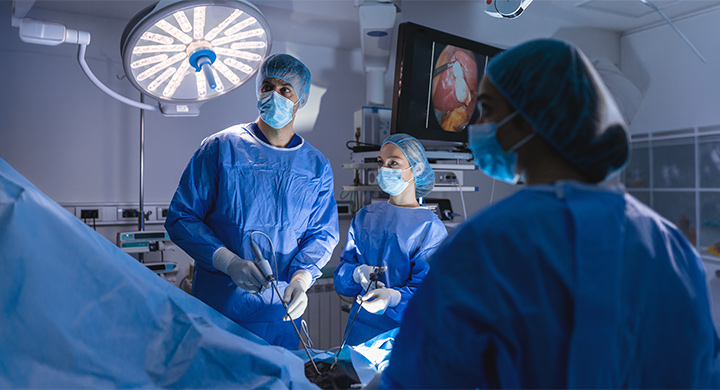
Has your urologist recommended kidney, prostate, or bladder surgery? The first question is, how serious is it, and how long will the recovery take? Laparoscopic surgery has changed the answer to this question. Instead of the traditional 10-15 cm incision, the surgeon operates through two to four tiny openings less than 1 cm wide. The doctor uses a clear camera image displayed on a high-resolution monitor.
Laparoscopic and robotic techniques form the foundation of our surgical practice. Our 14 experienced urologists use these techniques to treat kidney cancer, prostate cancer, bladder disease, and many other urological conditions, providing better results, less scarring, and faster recovery for our patients. Let’s discuss the main benefits of laparoscopic surgery.
What Is Laparoscopic Surgery?
This minimally invasive procedure involves surgery through small incisions rather than one large opening. The key instrument is the laparoscope. This thin, telescope-like rod, approximately 1 cm in diameter, is equipped with a high-definition video camera. The camera transmits a magnified image in real time to a monitor in the operating room. It allows the surgeon to precisely guide instruments throughout the procedure.
The fundamental difference from open surgery is the access. Traditional abdominal surgery requires an incision of 6–15 cm. Laparoscopy requires only 2–4 punctures of 0.5–1 cm each—one for the camera and the others for surgical instruments. This reduces tissue trauma, accelerates healing, and improves the patient’s postoperative experience.
How Does a Laparoscopic Procedure Work
Preparing for Surgery
Do not eat, drink, or smoke after midnight the night before your procedure. Wear loose, comfortable clothing and remove all jewelry. Arrange a ride home. You will be under general anesthesia and cannot drive yourself.
During the Procedure
- The patient is positioned on the operating table, typically with the head end slightly lowered.
- General anesthesia is administered. Muscles are relaxed, and you will feel nothing.
- The surgeon makes the first small incision and inserts a tube to fill the abdomen with carbon dioxide gas.
- The CO₂ inflates the abdominal cavity, creating a working space and improving visibility of internal organs.
- The gas tube is removed, and the laparoscope is inserted through the same incision.
- One to three additional small ports are made for the surgical instruments—graspers, scissors, and needle drivers.
- The entire operation is performed while watching the monitor. The surgeon’s hands never enter the body.
- When complete, the gas is released, incisions are closed with sutures or surgical glue, and small dressings are applied.
Diagnostic laparoscopy takes 30–60 minutes. Surgical laparoscopy lasts 1–3 hours, depending on its complexity. In rare cases, if anatomical differences or unexpected findings make continuing laparoscopic surgery unsafe, the surgeon may switch to an open approach. Safety always comes first.
What Conditions and Procedures Use Laparoscopy?
Laparoscopic techniques are now applied across dozens of surgical specialties. They carry particular importance in urology. It is the specialty at the heart of OCUA’s practice.
Urological Procedures Performed at OCUA
Imagine that in the past, doctors had to make a large incision for many surgeries—ten to fifteen centimeters, or even more. This was painful, took a long time to heal, and left a noticeable scar. Now, in many cases, surgeons make do with three small incisions. Through these incisions, the doctor inserts a camera and thin instruments and performs the surgery while viewing a screen. This approach is called laparoscopy.
For example, in the case of kidney cancer, the entire kidney can be removed through incisions rather than a long incision. Or, it’s possible to remove only the tumor, preserving healthy kidney tissue. This is especially valuable if a person has only one kidney or is at risk of future kidney problems. In prostate cancer, the da Vinci robot helps the surgeon operate with pinpoint precision, removing the diseased gland while sparing the nerves responsible for erectile function and urinary retention. If the bladder needs to be removed, laparoscopy also eliminates the need for a large incision. Doctors now often remove the adrenal glands through incisions, a procedure called an adrenalectomy.
There are also non-oncological examples. Varicocele is a dilated vein near the testicle that prevents men from fathering children. Doctors treat it minimally invasively by ligating the affected veins. If a boy’s testicle hasn’t descended into the scrotum in time, it is also fixed in place through small punctures.
And this isn’t just urology. Laparoscopy is now the gold standard for gallbladder removal for stones, appendicitis, hernias, colon surgery, and even bariatric surgery to help with weight loss. Doctors have studied and tested this method so thoroughly that it has become common, everyday practice in almost all areas of surgery.
Benefits of Laparoscopic Surgery vs. Open Surgery
Three decades of clinical evidence consistently demonstrate the advantages of the laparoscopic approach. A 2025 comparative review in the Fortune Journal of Health Sciences found that laparoscopic cholecystectomy patients reported statistically significantly higher postoperative satisfaction than open surgery patients (p=0.02). Average hospital stays for laparoscopic gynecologic procedures were 16.4 days versus 23.3 days for open approaches—a 30% reduction. For urology patients at OCUA, these numbers translate directly into less time in the hospital and a faster return to the life you love.
Table 1. Laparoscopic Surgery vs. Open Surgery: A Side-by-Side Comparison
| Criteria | Laparoscopic Surgery | Open Surgery |
| Incision Size | 0.5–1 cm (2–4 small ports) | 6–15 cm (one large cut) |
| Procedure Duration | 30 min – 3 hours | 1–5 hours |
| Hospital Stay | 1–3 nights for most urological procedures; some minor cases may be same-day | 3–7+ days |
| Post-op Pain | Mild; fewer pain medications | Significant; requires stronger analgesics |
| Infection Risk | Significantly lower | Higher (larger wound surface) |
| Blood Loss | Minimal | Moderate to significant |
| Return to Work | 1–2 weeks (desk); 3–4 weeks (physical labor) | 4–8 weeks |
| Scarring | Nearly invisible | Visible long scar |
| Patient Satisfaction | Significantly higher (p=0.02) | Lower |
Robot-Assisted Laparoscopic Surgery
OCUA offers the next step in minimally invasive surgery—robot-assisted procedures using the da Vinci® Surgical System. This high-precision platform expands surgeon capabilities. The da Vinci® System provides high-resolution 3D visualization, articulated instruments with seven degrees of freedom, and real-time tremor filtering. It is the only FDA-approved surgical robot for radical prostatectomy. Our surgeons at OCUA use it for prostate, kidney, and bladder procedures, consistently delivering excellent clinical outcomes with the benefits of minimally invasive recovery.
What Are the Risks of Laparoscopic Surgery?
Laparoscopic surgery is safe and has a proven track record. However, like any surgical procedure, it carries risks that every patient should understand:
- Bleeding at the incision site
- Unintentional injury to adjacent organs or blood vessels
- Adverse reaction to anesthesia
- Infection (much less common than with open surgery)
- Abdominal distension due to residual CO₂ gas (temporary; causes radiating pain to the shoulder, which resolves within 1–2 days)
- Deep vein thrombosis
A 2025 retrospective study found a postoperative ileus rate of just 4.0% in laparoscopic appendectomy versus 14.7% in the open group (p = 0.020)—a powerful illustration of how much less trauma the body experiences with the laparoscopic approach. Your OCUA surgeon will review all relevant risks specific to your procedure during your preoperative consultation.
Laparoscopic Surgery Recovery Time
One of the most common questions patients ask is, “When will I return to normal life?” The answer depends on the specific procedure, your overall health, and how closely you follow postoperative care instructions. Let’s describe laparoscopic surgery after care. This procedure consistently provides a faster recovery than open surgery. Early activity is not only permitted. It is actively encouraged. A controlled 2023 study found that patients who performed supervised 15-minute after-laparoscopy exercises twice daily after laparoscopic colorectal surgery were discharged significantly earlier (median 6.0 vs. 6.5 days, p=0.021) and rated their readiness for discharge as higher.
Table 2. Recovery Timeline After Laparoscopic Surgery
| Period | Permitted / Recommended | Restrictions |
| Days 1–2 | Short walks around the house; gentle movement. Pain and residual CO₂ shoulder discomfort are normal | No driving, no lifting over 5 lbs., and no strenuous activity. |
| Days 3–7 | Gradually increase walk duration. Most desk-job patients can return to work. | Avoid alcohol. Keep incisions dry. No heavy lifting. |
| Weeks 2–4 | Moderate activity: light yoga, stretching, 30–45 min walks. Physical-labor workers may return. | Avoid high-impact cardio and strength training. |
| Month 2+ | Full resumption of all activities, including exercise, sports, and sexual activity. | Only after surgeon clearance at the follow-up visit. |
Laparoscopic Surgery Aftercare
After surgery, your small incisions need proper care. Keep them clean and dry. You can remove the regular bandage the morning after surgery. You can remove Steri-Strips after 7–14 days. If special surgical glue was used instead, don’t touch it at all; it will fall off on its own when the time is right. You can shower, but afterward, gently pat the incision sites dry with a towel; don’t rub. And watch for warning signs. If you experience increasing redness or swelling around the incision, any oozing, or an unpleasant odor, be sure to tell your doctor.
As for general rules: after anesthesia, you should avoid drinking alcohol for at least 24 hours. Driving is only permitted with the surgeon’s permission. Don’t be alarmed if your bowels aren’t working as usual for a few days—this is normal, and everything will return to normal. Sometimes, your shoulder hurts after laparoscopy because residual carbon dioxide puts pressure on the diaphragm. This is not dangerous and will resolve on its own within a day or two. Take the prescribed painkillers exactly as directed, and don’t exceed the recommended dose.
Call Your OCUA Surgeon Immediately If You Experience
- Fever above 101°F (38.3°C)
- Increasing pain that is not controlled by medication
- Redness, warmth, or discharge from any incision
- Difficulty or inability to urinate
- Severe nausea, vomiting, or inability to keep fluids down
If you cannot reach us, go to the emergency room.
Laparoscopic Urology at Orange County Urology Associates
OCUA provides multidisciplinary services to patients throughout Orange County and beyond. Our 14 urologists combine decades of surgical experience with access to the most advanced technologies, including the da Vinci® robotic surgical system and a full range of laparoscopic procedures.
Confronted with kidney cancer, prostate disease, bladder problems, or another urological condition? Don’t panic. Our team will develop a urology treatment plan tailored to your individual needs, utilizing minimally invasive techniques when appropriate.
Orange County Urology Associates
23961 Calle de la Magdalena, Suite 500, Laguna Hills, CA 92653
Offices also in: Mission Viejo | Huntington Beach | Irvine
☎ Schedule Your Consultation Today: 949-855-1101
Frequently Asked Questions
Is laparoscopic surgery considered major surgery?
It is minimally invasive, but that doesn’t necessarily mean it’s a minor procedure. For example, radical nephrectomy or prostatectomy are major surgeries. Doctors perform them under general anesthesia. Your OCUA surgeon will explain the scope and complexity of your specific procedure in detail.
Is every patient suitable for laparoscopic surgery?
Not always. The ideal approach depends on your diagnosis, anatomy, surgical history, and overall health. In some cases, open or robotic surgery may be the best option. Your urologist at OCUA will recommend the approach most likely to achieve the best outcome for you.
When can I exercise after laparoscopy?
We recommend light walks from the first day. Moderate activities, including gentle yoga and swimming, can usually be started after 2-4 weeks. Strenuous exercise and heavy lifting should be postponed until 4-6 weeks after surgery and require direct approval from your surgeon. However, each case is individual. A doctor’s consultation is essential.
Why does my shoulder hurt after laparoscopic surgery?
Shoulder and upper back pain after laparoscopy is caused by residual carbon dioxide exposure to the diaphragm. This is normal and temporary. It usually resolves within 24-48 hours. Walking and light exercise help speed recovery.

Don Bui
Dr. Don T. Bui is a board-certified urologist with a medical degree from Northeast Ohio Medical University. He completed his residency at William Beaumont Hospital, Royal Oak, MI, and a fellowship in Minimally Invasive Urology at Emory University in Atlanta, GA. Certified by the American Board of Urology, Dr. Bui is a member of the American Urological Association, American Association of Clinical Urologists, and Vietnamese Physician Association of Southern California. Known for his open communication style, he tailors treatment plans to individual circumstances, emphasizing the importance of understanding and trust.
Areas of Expertise: Urological Surgery, Minimally Invasive Urology, Communication and Patient-Centric Care, Community Engagement


- August 2026
- June 2026
- May 2026
- April 2026
- March 2026
- February 2026
- January 2026
- December 2025
- November 2025
- October 2025
- September 2025
- August 2025
- July 2025
- June 2025
- May 2025
- April 2025
- March 2025
- February 2025
- December 2024
- November 2024
- October 2024
- September 2024
- August 2024
- July 2024
- June 2024
- September 2020
- October 2018
- December 2017
- January 2017
- August 2016
- January 2016
- April 2015
- January 2014
- April 2013
- March 2013
- February 2013
- January 2013
- June 2012
- May 2012
- February 2012
- January 2012
- March 2011
- January 2011


